Industrializing the path from molecular design to application
High-impact pipelines for next-generation bioproducts.
A strategic focus on high-value secondary metabolites currently transitioning from virtual pathway engineering to physical validation.
| Target molecule | Molecular family | Molecular design | Virtual pathway engineering | In vitro validation | Bioprocess optimization | Scale-up & application development |
|---|---|---|---|---|---|---|
| Antibiotic-delivery siderophore | Siderophores | |||||
| Siderophores are iron-binding molecules that microorganisms use to capture iron from their surroundings. Marine-derived siderophores are being explored for “Trojan horse” antibiotic delivery, using bacterial iron-uptake mechanisms to improve antibiotic entry into Gram-negative bacteria and potentially overcome specific resistance barriers. 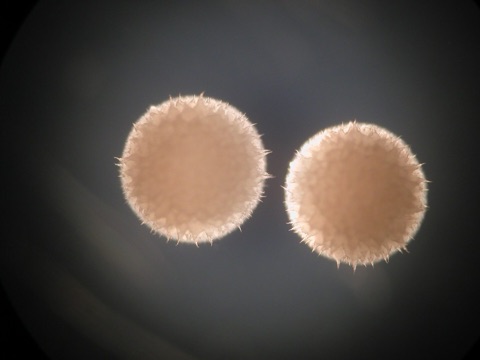 | |||||
| Biosynthetic heparin | Glycans | |||||
| Glycans are carbohydrate molecules with diverse structural and biological functions, including those involved in anticoagulation. Microbially produced alternatives to animal-derived heparin are being developed for potential applications in anticoagulation and antiviral coatings for medical devices. 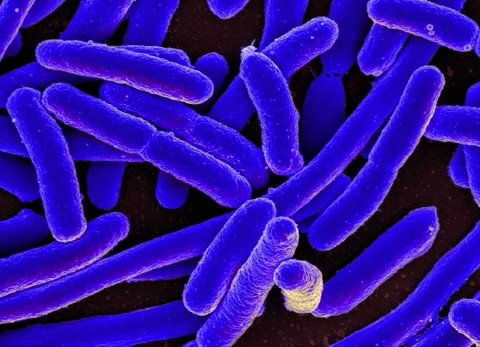 | |||||
| NIR-II biopigments | Phycobilins | |||||
| Phycobilins are light-absorbing pigments naturally involved in photosynthesis in organisms such as cyanobacteria and red algae. Engineered derivatives targeting the NIR-II optical window are being explored for their potential to enable non-invasive, deep-tissue diagnostic imaging. 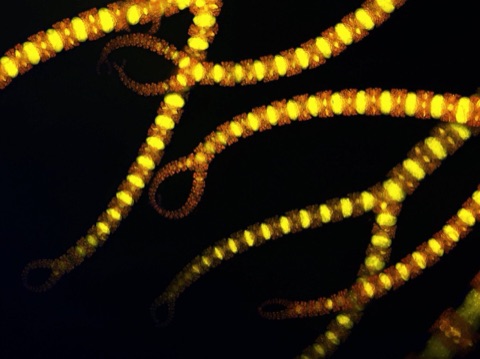 | |||||